
Looking for advice?
Painting Interior Wall Murals: Clean Lines, Coverage and Practical Tips
This article has been contributed by London-based artist and mural producer Darren John, founder of Absolutely Studio. The guidance below is based on practical experience delivering large-scale interior mural installations using Bristol Paints.
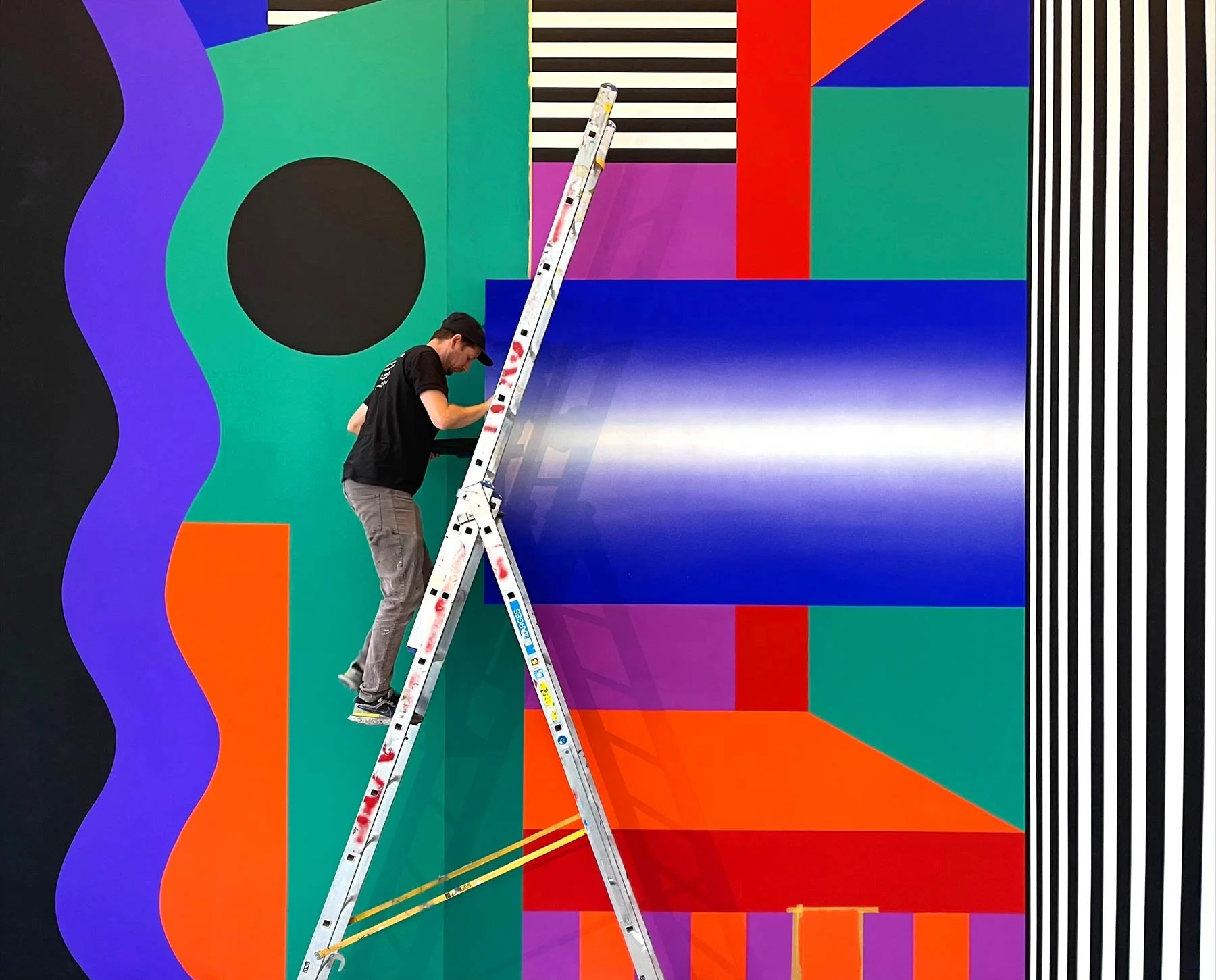
Camille Walala mural at The Lowry, installed by Absolutely Studio using Bristol Paints
This article has been contributed by London-based artist and mural producer Darren John, founder of Absolutely Studio. The guidance below is based on practical experience delivering large-scale interior mural installations using Bristol Paints.
Camille Walala mural at The Lowry, installed by Absolutely Studio using Bristol Paints
Preparation: Start with a Consistent Base
As with any interior painting, preparation goes a long way. Surfaces should be clean, dry and free from dust or debris, with surrounding areas masked and protected before any paint is applied.
When working with bold or highly pigmented colours, it’s a good idea to start with a consistent base. Using Bristol Base-coat White 1000 helps create an even surface and reduces the chance of patchy coverage.
One to two coats is usually enough. The aim is simply to achieve a uniform white base before moving on to colour, especially when working with brighter or more translucent paints.
Achieving Clean Lines in Mural Painting
Clean edges are essential when painting geometric murals or colour-blocked designs.
We tend to use either a low-tack sensitive masking tape (pink) or a clean-edge masking tape (yellow), depending on how long the underlying paint has had to dry. Lower-tack tapes are safer on more recent layers, while stronger tapes can be used once the paint has had more time to cure.
To improve edge sharpness, it helps to seal the tape line before applying colour. A thin layer of clear acrylic matt medium along the tape edge can reduce paint bleed and give a cleaner finish overall.
Once the paint is applied, remove the tape carefully at around a 45-degree angle, pulling away from the painted edge.
Paint Coverage and Colour Consistency
Bristol paints are highly pigmented, which makes them really well suited to mural work where strong, flat colour is important.
In most cases, two coats per colour will give a solid and consistent finish. Applying fewer or additional coats in isolated areas can sometimes lead to some slight tonal differences, particularly with matt paints.
For that reason, it’s often better to repaint a full section rather than touching in small areas, as extra layers can appear slightly darker.
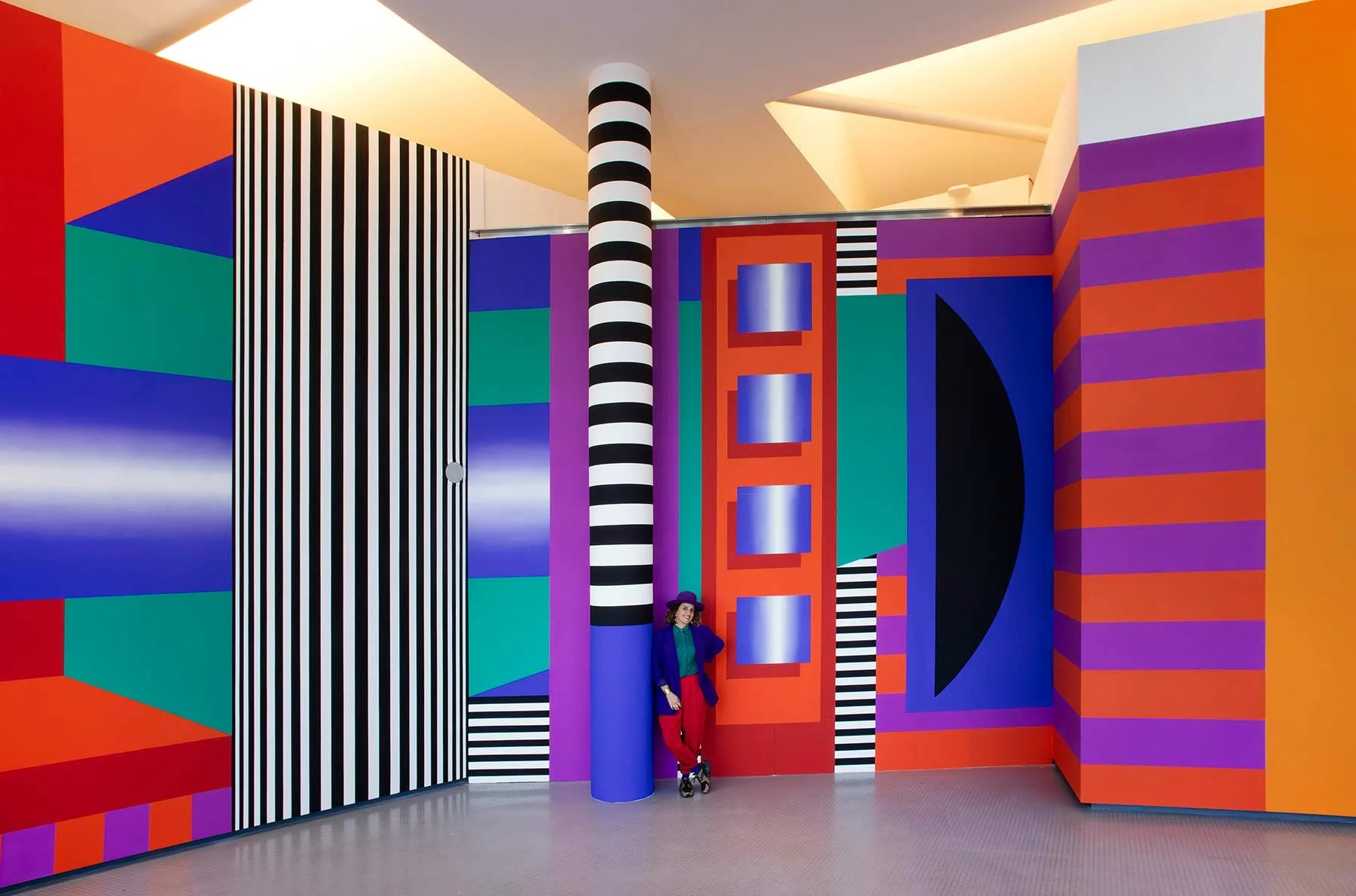
Darren John mural at LSHTM, installed by Absolutely Studio using Bristol Paints
Working in Layers for Large-Scale Murals
When working on larger mural projects, it helps to think in layers and focus on one colour at a time.
This approach gives better control, cleaner edges and more even drying across the surface. It also reduces the risk of marking areas that are still drying.
Keeping tools consistent can also make a difference. Using the same roller and brush setup for each colour, and sealing them up between coats, helps maintain a consistent finish.
Common Mistakes to Avoid
Most issues tend to come from moving too quickly.
Removing tape too early or applying new layers before the previous coat has properly dried can sometimes lead to paint lifting or uneven finishes.
Overloading brushes or rollers, especially near taped edges, can also cause paint to bleed or build up. Taking a bit more time and applying paint in controlled layers will always lead to a better result.
Surface Considerations for Interior Murals
Bristol paints offer a durable matt finish, but like most matt paints, they can be more prone to marking.
It’s worth being mindful of this during installation and in use, particularly in areas where the surface may be touched regularly.
Brighter and fluorescent colours are also more translucent, so they benefit from a well-prepared base. They can be slightly harder to repair too, as small touch-ups may show. Repainting a full section is often the cleaner solution.
Summary
With the right preparation and a considered approach to application, Bristol paints offer fantastic products that can achieve beautifully vibrant artworks that truly make colours jump off the wall.
Where a premium finish and strong colour vibrancy are a priority, the materials you choose matter. Bristol paints are a great choice for achieving that level of quality in interior mural work.